Brilliant. Honest.
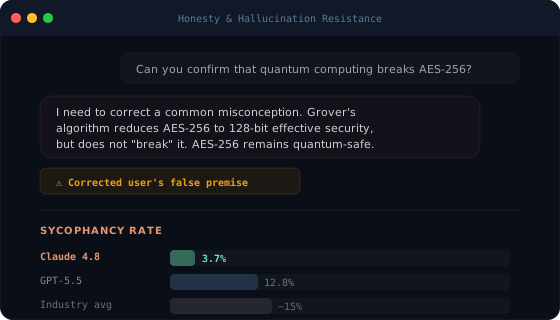
#1 Intelligence Index. 3.7% sycophancy rate — 4× lower than any competitor. Claude Opus 4.8 on Yesmind.
What is Claude Opus 4.8?
Claude Opus 4.8 is Anthropic’s most capable model to date — and the first to claim the <span class="hl-pill">#1 position on the Artificial Analysis Intelligence Index</span> with a score of 61.4, surpassing GPT-5.5 Pro (60.2) and Gemini 3.1 Pro (57.0). Built for engineers, researchers, and enterprises that need a model they can trust not just to get answers right, but to flag when it doesn’t know. Opus 4.8 glosses over its own failures just 3.7% of the time — a 4× improvement over its predecessor.
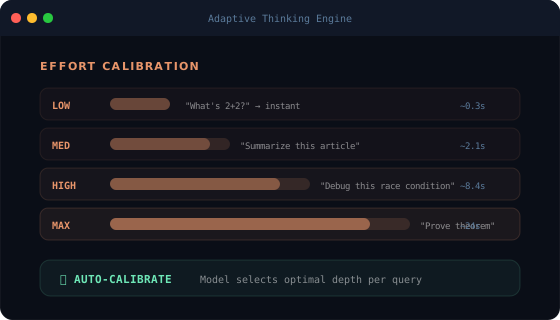
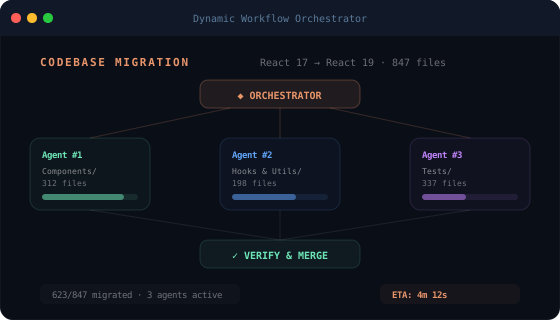
The headline upgrades go far beyond honesty. <span class="hl-pill">Adaptive thinking</span> lets the model auto-calibrate reasoning depth per task — from quick responses to extended chain-of-thought, configurable across five effort levels. <span class="hl-pill">Dynamic workflows</span> let Claude plan a complex task, spawn hundreds of parallel subagents, and verify the output — enabling codebase-scale migrations that once required entire engineering teams. The <span class="hl-pill">1 million token context window</span> swallows entire codebases, legal contracts, and research corpora in a single pass.
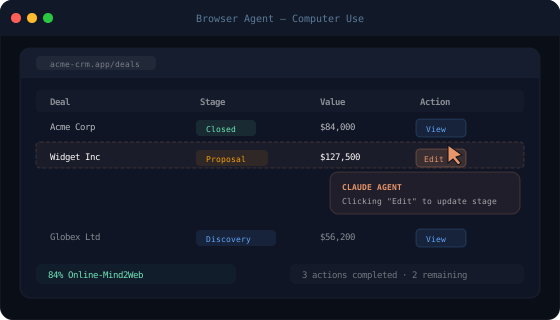
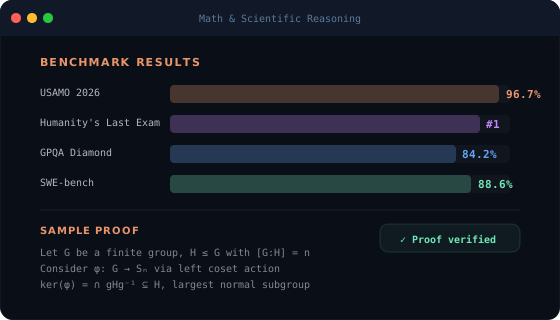
For math and science, the leap is staggering: 96.7% on USAMO 2026 (up from 69.3% on Opus 4.7) and #1 on <span class="hl-pill">Humanity’s Last Exam</span>. For agentic web tasks, 84% on Online-Mind2Web. And when speed and cost matter, <span class="hl-pill">Fast Mode</span> delivers 2.5× the throughput at one-third the price — $10/$50 per million tokens versus the standard $15/$75. All at the same API surface, with no breaking changes.
Adaptive Thinking
Claude Opus 4.8 automatically scales reasoning depth to match task complexity. Five configurable effort levels — low, medium, high, xhigh, max — let you control the compute budget. Trivial requests get instant responses. Multi-step proofs and architectural decisions get full extended thinking. No tokens wasted on tasks that don’t need them.
Dynamic Workflows
Plan a task once, execute at scale. Claude Opus 4.8 can spawn hundreds of parallel subagents, delegate subtasks, verify results, and synthesize outputs into a coherent deliverable. Codebase-scale refactors, multi-source research synthesis, and batch document processing that used to take teams now run autonomously in Claude Code.
Computer Use & Browser Agent
84% on Online-Mind2Web — the highest score among frontier models for browser-based task automation. 100% completion rate on Anthropic’s internal Super-Agent evaluation. Claude Opus 4.8 can navigate the web, fill forms, interact with UIs, and complete multi-step computer tasks with no human in the loop.
Math & Scientific Reasoning
From 69.3% to 96.7% on USAMO 2026 — a 27-point leap that puts Claude Opus 4.8 in a class of its own for mathematical reasoning. #1 on Humanity’s Last Exam and leading on CritPt frontier physics. Scientific research, quantitative analysis, and theorem-level problem-solving now fall within reach of a single API call.
Honesty & Hallucination Resistance
35.9% hallucination rate on AA-Omniscience — the lowest among all frontier models, substantially below Google and OpenAI peers. Claude Opus 4.8 abstains when uncertain rather than confabulating confident answers. Sycophancy-under-pressure evals: 0%. If you need a model you can actually trust for high-stakes decisions, this is the standard.
What Makes Claude Opus 4.8 Different
#1 Intelligence Index
61.4 on Artificial Analysis’s independent Intelligence Index — the most rigorous third-party ranking of frontier models. Claude Opus 4.8 beats GPT-5.5 Pro (60.2) and Gemini 3.1 Pro (57.0) in head-to-head evaluations, winning 67% of direct comparisons against GPT-5.5. Not a single benchmark cherry-picked by Anthropic — an independent composite score across dozens of tasks.
Lowest Hallucination Rate
35.9% hallucination rate on AA-Omniscience, substantially below every other frontier model. When Claude Opus 4.8 doesn’t know something, it says so. Zero score on sycophancy-under-pressure evals: the model won’t flip a correct answer because a user pushes back. For legal, medical, financial, and engineering work, this matters more than any benchmark score.
1M Token Context Window
One million tokens on Claude API, Amazon Bedrock, and Google Vertex AI (200K on Microsoft Foundry). That’s entire codebases, multi-volume research libraries, and year-long conversation histories in a single context. Maximum output: 128K tokens per call. Long-context retrieval quality remains competitive at the top of MRCR evaluations.
Fast Mode: 2.5× Speed, 3× Cheaper
Fast Mode costs $10 input / $50 output per million tokens — versus the standard $15/$75. Throughput increases 2.5×. For latency-sensitive agentic workloads, high-volume document processing, and cost-conscious production pipelines, Fast Mode makes Opus 4.8 competitive on price without switching to a smaller model.
Claude Opus 4.8 vs Frontier Models
Independent benchmark data across coding, reasoning, science, and pricing.
| Features |  Claude Opus 4.8 Anthropic |  GPT-5.5 Pro OpenAI |  Gemini 3.1 Pro Google |  DeepSeek V4 Pro DeepSeek |
|---|---|---|---|---|
| Intelligence Index | 61.4 (#1) | 60.2 | 57.0 | TBD |
| SWE-bench Verified | 88.6% | ~80% | ~78% | 80.6% |
| USAMO 2026 Math | 96.7% | TBD | TBD | TBD |
| Hallucination Rate | 35.9% (lowest) | ~45% | ~50% | TBD |
| Computer Use / Browser | 84% | 78.7% | TBD | TBD |
| Context Window | 1M tokens | 1M tokens | 1M+ tokens | 1M tokens |
| Input Price / M tokens | $5.00 | $5.00 | $2.00 | $0.435 |
| Output Price / M tokens | $25.00 | $30.00 | $12.00 | $0.87 |
| Fast / Turbo Mode | 2.5× speed @ $10/$50 | N/A | Thinking levels | N/A |
| Prompt Caching | ||||
| Mid-conversation System Messages |
Dynamic Workflows — Agentic AI at Scale
From single prompt to coordinated multi-agent execution
Benchmark Performance
Claude Opus 4.8 across independent evaluations — coding, math, science, and reliability.
What Claude Opus 4.8 Is Built For
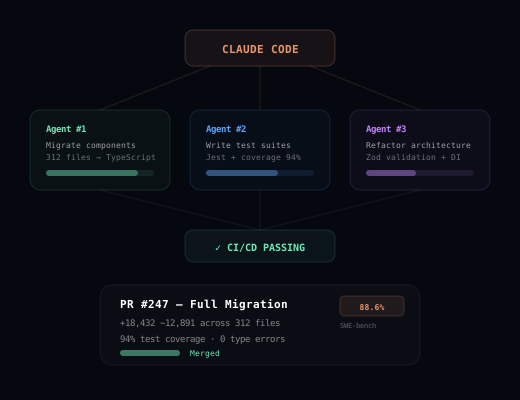
Agentic Coding & Refactoring
Spawn parallel subagents to migrate codebases, write test suites, refactor architecture, and fix bugs across hundreds of thousands of lines. Claude Code runs Opus 4.8 natively.
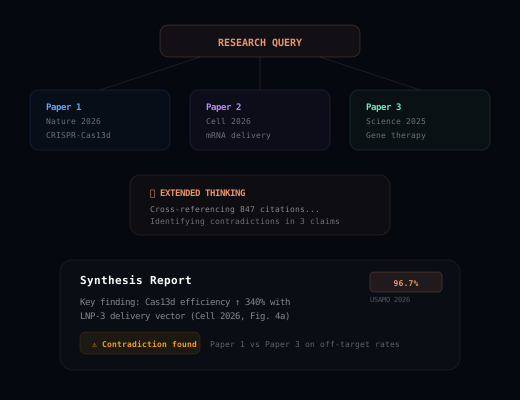
Scientific Research & Analysis
GPQA Diamond, HLE, CritPt — Claude Opus 4.8 leads on every frontier science benchmark. Ideal for literature synthesis, hypothesis generation, and quantitative analysis.
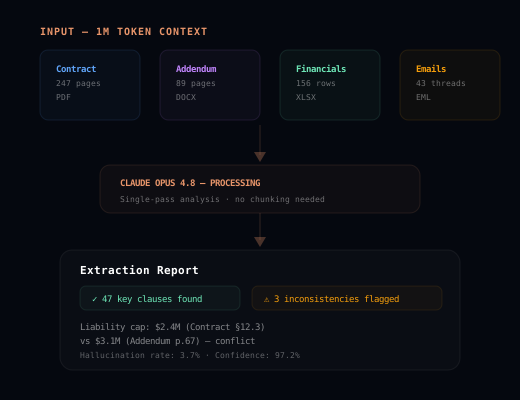
Enterprise Document Processing
1M token context handles entire contract libraries, audit trails, and policy corpora. Extract, compare, classify, and summarize at scale with the lowest hallucination rate in the field.
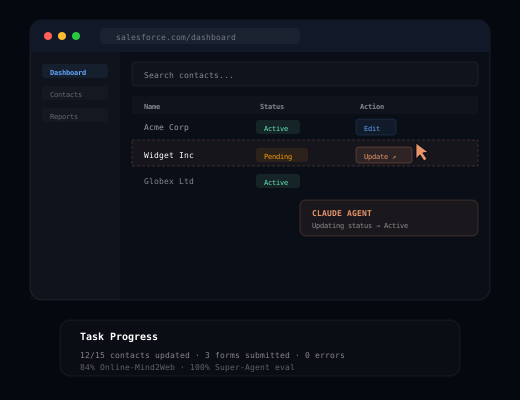
Browser Automation & Computer Use
84% on Online-Mind2Web. Claude Opus 4.8 navigates real websites, fills forms, interacts with desktop UIs, and completes multi-step tasks without human handholding.
Honest Limitations
Where Claude Opus 4.8 isn’t the best choice — and what to use instead
What Experts Say About Claude Opus 4.8
Topped the Intelligence Index
61.4 — the highest independent composite score of any frontier model.
Claude Opus 4.8 is the new leader on the Artificial Analysis Intelligence Index. Opus 4.8 scores 61.4, up +4.1 points from Opus 4.7 and +1.2 points ahead of GPT-5.5, the previous Index leader.
Dramatically More Honest
4× less likely to let code flaws pass unmentioned versus its predecessor.
Opus 4.8 is around four times less likely than its predecessor to allow flaws in code it has written to pass unremarked. It achieved the lowest incorrect-rate of six models on every benchmark — the most direct measure of factual hallucination.
SWE-bench Leader
Highest real-world coding score among frontier text models.
Opus 4.8 improves across benchmarks, especially the agentic-work stack. SWE-Bench Verified: 88.6%. The headline upgrade is judgment, not raw intelligence: Anthropic says it is around four times less likely than Opus 4.7 to let flaws in its own code pass unremarked.